
WHAT YOU NEED TO KNOW
Roulette is a classic casino game of pure chance where players bet on which numbered pocket a spun ball will land, with the house maintaining a fixed mathematical advantage on every spin.
- The house edge is 2.70% on single-zero European wheels and 5.26% on double-zero American wheels.
- Outcomes are determined entirely by random physics in live play or audited random number generators in digital formats.
- Single-number bets offer the highest potential payout of 35 to 1, though they carry the lowest probability of winning.
Having the basic roulette rules explained before you play is key to managing your budget and keeping your gameplay safe.
What is Roulette and How Does It Work?
Roulette is a traditional casino game played with a spinning wheel, a small ball, and a numbered betting layout. Players place chips on the table to wager on where the ball will rest when the wheel comes to a stop. The game relies entirely on random physical outcomes or certified digital algorithms, meaning no skill can influence the final result.
Every spin is completely independent of the last, meaning past winning numbers have no impact on future spins. The casino maintains an edge because the payouts are mathematically structured as if the green zero pockets do not exist. For detailed regulatory and compliance information regarding online casino fair-play standards, you can read our legal notice page.
What Are the Basic Roulette Rules Explained for Beginners?
The core objective of roulette is to predict the specific pocket or group of pockets where the ball will land. Before each spin, players must place their wagers using table-specific chips to avoid confusion with other players. The dealer spins the wheel in one direction and sends a small white ball in the opposite direction along a tilted track. Once the ball loses momentum and settles into a pocket, the dealer announces the winning number and pays out successful bets.
The essential rules governing standard table play include:
- Chip purchase: Players must exchange cash or standard casino chips for unique colored chips at the specific table, which prevents disputes over ownership.
- Betting window: Wagers are accepted until the dealer announces “No more bets” as the ball begins to slow down.
- Minimums and maximums: Every table has clear limits displayed, requiring all inside and outside bets to meet these specific thresholds.
- Payout security: Winners are paid according to fixed odds, and players must not touch their chips until the dealer has completed all payouts for that spin.
How Do American and European Roulette Differ?
The two primary versions of the game found in casinos in 2026 are American and European roulette. The defining difference is the number of green pockets on the wheel, which directly impacts your probability of winning and the house edge. The European version features a single zero, while the American version contains both a single zero and a double zero.
The table below highlights the crucial differences between these two layouts as of 2026:
| Version | Total Pockets | Green Pockets | House Edge | Payout Ratio |
|---|---|---|---|---|
| European Roulette | 37 | 1 (0) | 2.70% | up to 35:1 |
| American Roulette | 38 | 2 (0, 00) | 5.26% | up to 35:1 |
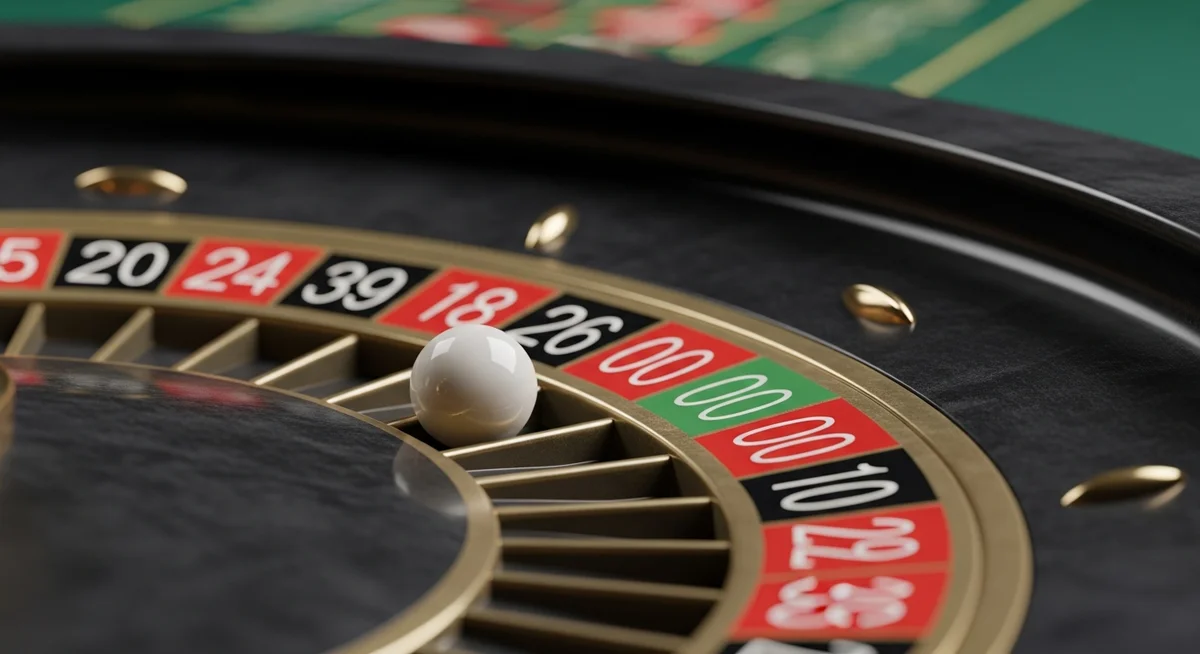
Some venues also feature a triple-zero version, often represented by a casino logo, which adds a third green space and increases the house edge to 7.69%. Choosing a single-zero table is always the mathematically superior option for players looking to preserve their bankroll. We also prioritize your data security and encourage you to review our privacy policy to see how we handle your information.
What is the Roulette Table Layout and How Do You Make Bets?
The betting layout on a roulette table is divided into two main categories: inside bets and outside bets. Inside bets are located on the inner grid of numbers from zero to 36, while outside bets occupy the surrounding boxes for broader categories. Let’s look closely at how these distinct areas function and what betting options they offer.
What Are Inside Bets?
Inside bets target specific numbers or small clusters of adjacent numbers on the grid. While these bets offer higher payouts, they have a significantly lower mathematical probability of winning. Players can place their chips on the lines between numbers to cover multiple outcomes with a single bet.
| Bet Type | Numbers Covered | Payout | Win Probability (European) |
|---|---|---|---|
| Straight Up | 1 | 35 to 1 | 2.70% |
| Split | 2 | 17 to 1 | 5.41% |
| Street | 3 | 11 to 1 | 8.11% |
| Corner | 4 | 8 to 1 | 10.81% |
| Line | 6 | 5 to 1 | 16.22% |
What Are Outside Bets?
Outside bets are placed on the boxes surrounding the main number grid. These wagers cover large groups of numbers, making them excellent options for players who prefer lower volatility and more frequent, albeit smaller, payouts. Outside bets are paid at lower odds and usually lose if the ball lands on a green zero.
The primary outside bets available to players include:
- Red or Black: A wager that the winning number will match the chosen color, paying 1 to 1 (even money).
- Odd or Even: A bet on whether the winning number will be odd or even, paying 1 to 1.
- High or Low: Wagering on whether the number falls in the low range (1 to 18) or high range (19 to 36), paying 1 to 1.
- Dozens: Betting on one of the three sets of 12 numbers (1 to 12, 13 to 24, or 25 to 36), paying 2 to 1.
- Columns: A bet on any of the three vertical columns of 12 numbers on the grid, paying 2 to 1.
What Are Announced or Called Bets?
In European and French roulette variations, players can make advanced wagers known as announced or called bets. These bets correspond to specific sectors of the wheel rather than the logical layout of the table grid. Traditionally, called bets are spoken aloud to the dealer, who places the chips on a special racetrack-shaped betting area.
The most common announced bets include:
- Voisins du Zéro (Neighbors of Zero): Covers the 17 numbers closest to the single zero on the wheel, requiring nine chips.
- Tiers du Cylindre (Third of the Wheel): Covers the 12 numbers on the opposite side of the wheel, requiring six chips.
- Orphelins (Orphans): Covers the remaining eight numbers not included in the Voisins or Tiers bets, requiring five chips.
- Jeu Zéro (Zero Game): A smaller version of the Voisins bet covering the single zero and its six closest neighboring numbers.
What Are the Roulette Odds and Payouts?
Understanding the math behind your wagers is essential for managing your sessions. While the payouts remain identical across both American and European tables, the actual probability of winning is always lower on an American wheel due to the extra double-zero pocket. According to the UK Gambling Commission, licensed casino operators are required to clearly display these odds and rules to players before they participate.
The table below outlines the mathematical probabilities for the most common bets across both standard wheel variants in 2026:
| Bet Name | Payout | European Probability | American Probability |
|---|---|---|---|
| Straight Up | 35 to 1 | 2.70% | 2.63% |
| Split | 17 to 1 | 5.41% | 5.26% |
| Street | 11 to 1 | 8.11% | 7.89% |
| Corner | 8 to 1 | 10.81% | 10.53% |
| Dozens / Columns | 2 to 1 | 32.43% | 31.58% |
| Even Money | 1 to 1 | 48.65% | 47.37% |
Step-by-Step: How Do You Play a Round of Roulette?
If you are ready to play at a live or digital table, following a structured process helps ensure you do not make mistakes during busy betting windows. The standard sequence of play is straightforward and consistent worldwide. You must always remember to verify the specific table limits before placing any chips.
To play a standard round of roulette, follow these consecutive steps:
- Select your table: Find an open table that matches your budget by checking the minimum and maximum bet signs.
- Buy your chips: Place your cash on the table surface (never hand it directly to the dealer) to receive your unique colored chips.
- Place your wagers: Position your chips clearly on the table layout before or during the spin, ensuring they do not cross boundaries unless you intend to split.
- Watch the spin: The dealer spins the wheel and releases the ball, and you may continue betting until the dealer announces “No more bets.”
- Await the verdict: Once the ball settles, the dealer places a marker on the winning number, sweeps away losing bets, and distributes winnings.
What Is the Proper Roulette Etiquette and Table Conduct?
Playing in a physical casino requires adhering to specific unwritten rules of conduct to ensure a smooth game for everyone. Good etiquette keeps the table organized and prevents misunderstandings with casino staff. It is a vital aspect of player safety and smooth casino operations.
Keep these essential etiquette rules in mind during your sessions:
- Respect the marker: Never touch your winning chips or place new bets until the dealer has removed the marker from the winning number.
- Place cash on the layout: Dealers are legally forbidden from taking money or chips directly from a player’s hand, so always lay them on the felt.
- Adhere to the call: Once the dealer announces that there are no more bets, keep your hands away from the betting grid entirely.
- Handle disputes calmly: If there is a disagreement about chip placement, let the dealer or pit boss resolve it using security footage if necessary.
Are There Popular Roulette Betting Strategies That Work?
Many players use betting systems to manage their bankrolls, but it is vital to understand that no strategy can alter the mathematical house edge. Outcomes are entirely random and independent of past spins. The UK Gambling Commission enforces strict regulations on operators to ensure games are fair, random, and transparent.
Some of the most popular strategies include:
- The Martingale System: A high-risk strategy where you double your bet after every loss on even-money options, aiming to recover losses with a single win.
- The Fibonacci System: A progression system where you follow the famous sequence of numbers to determine your bet sizes, moving forward after losses and backward after wins.
- The D’Alembert System: A balanced approach where you increase your wager by one unit after a loss and decrease it by one unit after a win.
Using these progression systems can quickly lead to hitting table limits or exhausting your budget. As highlighted by BeGambleAware, players should never view gambling as a way to make money or recover existing debts. Always play responsibly, set strict limits before starting a session, and never wager money you cannot afford to lose.